Red wine has earned the perception of being a "healthier" form of alcohol that has cardiovascular benefits.
What does the data say about red wine and heart health?
In today's newsletter, we are going to dive into the truth behind red wine, the pros and cons, and whether it's truly beneficial for your heart.
The French Paradox
Let's start at the origin supporting red wine as beneficial for the heart: The French Paradox.
This term was coined after observing that the French population had relatively low rates of cardiovascular disease, despite consuming high levels of saturated fats.
What was the reasoning for this phenomenon?
The hypothesis was that the French's red wine consumption was the answer.
This was attributed to the polyphenolic properties of red wine, such as resveratrol, which have anti-inflammatory effects.
The French Paradox was widely publicized and popularized on 60 Minutes in the 1990s. This strongly influenced the public's perception that red wine was "healthy".
Although subsequent mechanistic studies yielded optimistic results, the original epidemiological associations were rooted in the French lifestyle and dietary factors.
The Truth About Red Wine: Good, Bad, & Ugly
Is there any truth to the French Paradox?
There is no question that red wine contains a long list of polyphenols, such as resveratrol, that exert antioxidant, anti-inflammatory, antithrombotic, and endothelial-protective effects that are mechanistically linked to potential cardiovascular benefits.
You can also obtain resveratrol by consuming grapes, cranberries, and blueberries.
All sounds great, in theory; however, the concentration required to reap these benefits is much higher than what is observed in a glass of red wine.
To reach a 250 mg daily dose of resveratrol (a common dose in clinical studies), one would need to consume an astronomical 125 liters of wine in a single day (over 100+ bottles).
Clearly, these amounts are far beyond safe or practical levels of alcohol consumption and would result in severe ethanol toxicity.
In addition, all forms of alcohol, including wine, are metabolized the same way. Our bodies break down alcohol (ethanol) into acetate and acetaldehyde, which is toxic to every cell in our body.
Alcohol is classified as a Group 1 carcinogen by the International Agency for Research on Cancer, and even low levels of consumption increase the risk of several cancers, including breast and colorectal cancer.
Ultimately, red wine contains polyphenols with antioxidant and anti-inflammatory properties; however, these do not counteract the overall toxicity of alcohol.
The Main Takeaway
Overall, the medical literature consistently emphasizes that the safest approach is to avoid alcohol altogether or minimize alcohol consumption, and that any potential benefit from polyphenols can be obtained from non-alcoholic sources.
With that being said, if you are going to drink red wine, do so because you enjoy it, not for its health benefits.
Drinking alcohol is a personal decision.
You have to find what works best for your life.
For me, it just didn't make sense to prioritize exercise, eat a clean diet, and work on my sleep, and then actively poison my body.
Your body, your rules, but make sure you understand the data.
Find what works best for you and your lifestyle.
What Makes Rho Different
Rho Nutrition because they bring something different to your fridge.
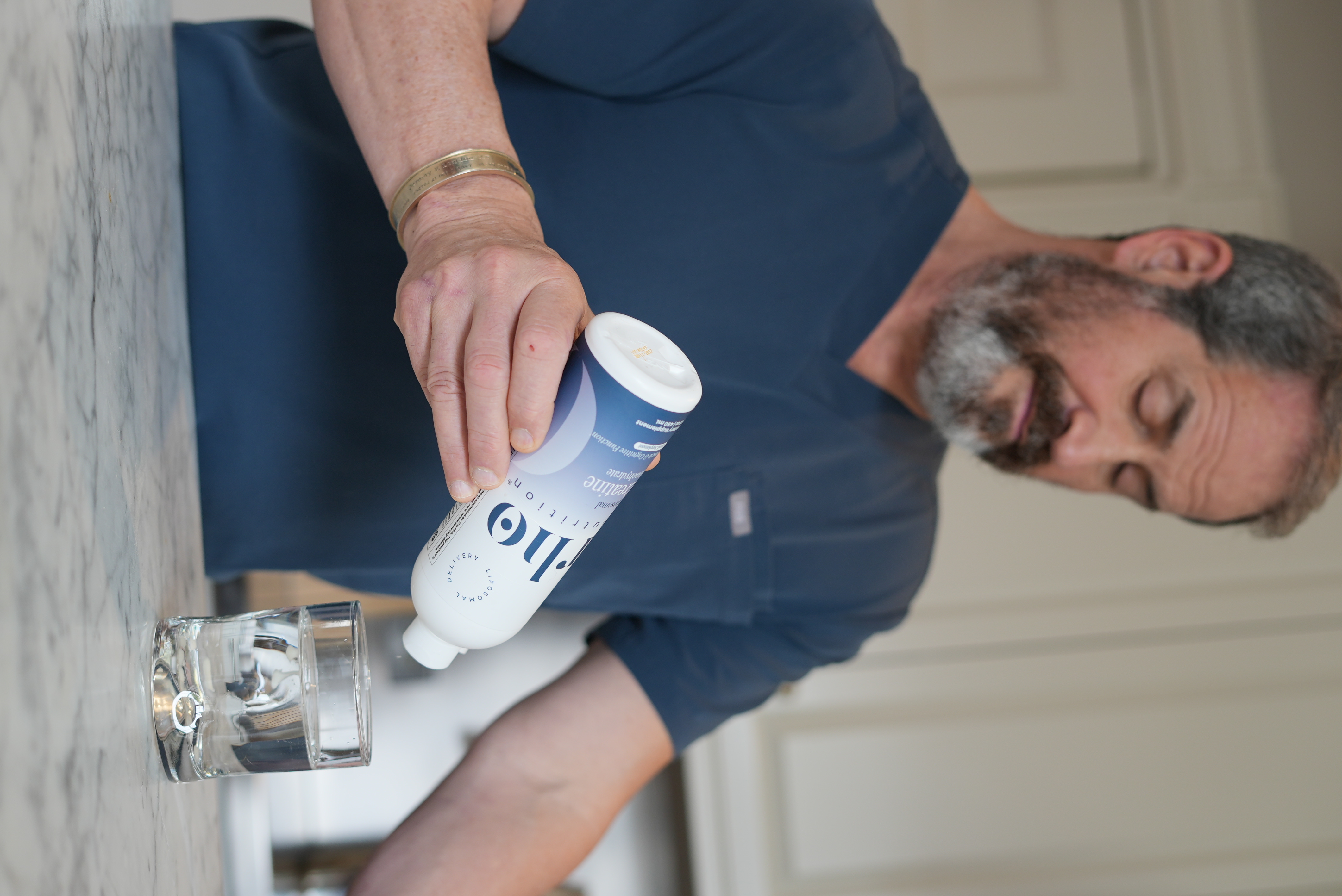
Rho offers third-party-tested liposomal delivery products. Why does this matter? Most pills and powders lose a significant amount of the active ingredient during digestion.
Rho encapsulates each nutrient (creatine, glutathione, NAD+, curcumin, collagen, etc.) within a tiny liposome that survives the gut and ferries the compound intact into the bloodstream.
Liposomal delivery helps ensure that the vitamins and supplements you purchase are getting absorbed and not lost during digestion.
My personal morning Rho stack is their liposomal creatine, glutathione, DIM+, and NAD+, and before bed, I take their liposomal magnesium.
The founders, Ryan and George, firmly believe you will feel the Rho difference, but if you're not satisfied, they offer a 60-day money-back guarantee.
Click here to save 20% and add Rho to your daily routine
Only the best,
Jeremy London, MD
P.S. Don't forget to follow my podcast for free on Spotify or Apple Podcasts



.jpg)





.jpg)
.jpg)